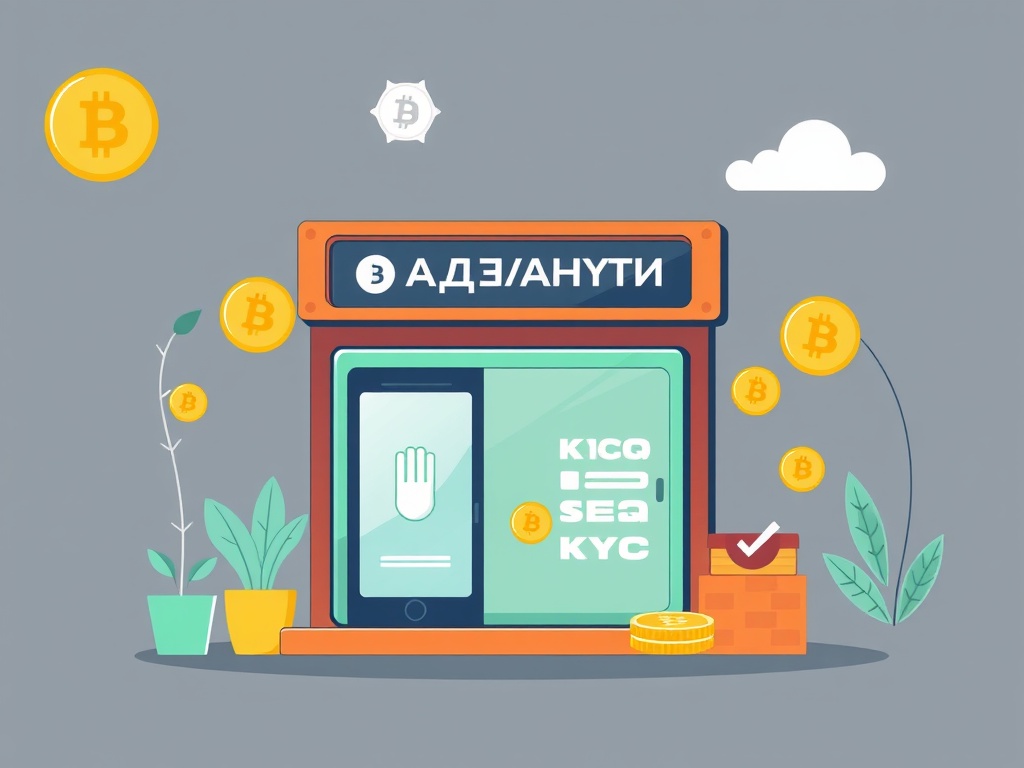
Bitcoin Privacy: Understanding Confidential Bitcoin Transactions

Bitcoin Privacy: Understanding Confidential Bitcoin Transactions
Bitcoin transactions are often perceived as anonymous, but in reality, they are pseudonymous and traceable on the public blockchain. This transparency creates privacy concerns for users who wish to keep their financial activities confidential. Confidential Bitcoin transactions address this issue by implementing various techniques to obscure transaction details while maintaining the integrity of the blockchain network.
How Confidential Bitcoin Transactions Work
Confidential Bitcoin transactions employ several cryptographic methods to hide transaction amounts and participant identities. The most common approach involves using confidential transactions (CT) technology, which was originally developed for the Blockstream's Elements project and later adapted for Bitcoin.
The core mechanism works by encrypting the transaction amounts using homomorphic commitments. These commitments allow the network to verify that inputs equal outputs without revealing the actual amounts. The technology uses Pedersen commitments, which combine the actual amount with a random blinding factor to create an encrypted value that can be verified mathematically.
Key Components of Confidential Transactions
Confidential transactions rely on several cryptographic components working together. Range proofs are essential elements that demonstrate the encrypted amounts fall within valid ranges without revealing the actual values. These proofs prevent users from creating negative amounts or exploiting the encryption to generate free Bitcoin.
Additionally, confidential transactions often incorporate CoinJoin technology, which combines multiple transactions from different users into a single transaction. This mixing process makes it significantly more difficult to trace which inputs correspond to which outputs, enhancing overall privacy.
Benefits of Confidential Bitcoin Transactions
The primary advantage of confidential Bitcoin transactions is enhanced financial privacy. Users can conduct transactions without exposing their financial history, current holdings, or spending patterns to the public. This protection is particularly valuable for businesses that wish to keep their financial operations confidential from competitors.
Confidential transactions also provide protection against price manipulation. When large transactions are visible on the blockchain, sophisticated traders can anticipate market movements based on whale activity. By obscuring transaction amounts, confidential transactions prevent this type of front-running and market manipulation.
Privacy for Personal Security
Financial privacy extends beyond business concerns to personal security. Public visibility of Bitcoin holdings can make users targets for theft, scams, or physical attacks. Confidential transactions help protect individuals by preventing others from determining their total Bitcoin holdings or tracking their transaction patterns.
This privacy protection is especially important in regions with unstable political or economic conditions, where financial privacy can be crucial for personal safety and asset protection.
Methods for Achieving Confidential Bitcoin Transactions
Several approaches exist for implementing confidential Bitcoin transactions, each with different trade-offs in terms of privacy, complexity, and compatibility with the existing Bitcoin network.
Bitcoin mixers, also known as tumblers, represent one of the most accessible methods for achieving transaction confidentiality. These services combine multiple users' Bitcoin and redistribute them in a way that breaks the connection between the original sender and recipient addresses.
Using Bitcoin Mixing Services
Bitcoin mixing services operate by collecting Bitcoin from multiple users, mixing them together, and then sending the mixed Bitcoin to the intended recipients. The process typically involves several steps to maximize privacy and make tracking difficult.
Users first send their Bitcoin to the mixing service's address. The service then combines these funds with Bitcoin from other users and applies various mixing techniques, such as random delays and multiple output addresses. Finally, the service sends the mixed Bitcoin to the recipient addresses specified by the users.
High-quality mixing services implement additional privacy features such as time delays, multiple mixing rounds, and the use of new, unused addresses for all transactions. These features make it significantly more challenging for blockchain analysts to trace the original source of the funds.
Technical Implementation of Confidential Transactions
The technical implementation of confidential Bitcoin transactions involves sophisticated cryptographic protocols that ensure both privacy and transaction validity. The most advanced implementations use zero-knowledge proofs, which allow one party to prove to another that a statement is true without revealing any information beyond the validity of the statement itself.
Confidential transactions typically employ Bulletproofs, a specific type of zero-knowledge proof that is particularly efficient for range proofs. Bulletproofs are non-interactive, meaning they don't require back-and-forth communication between parties, making them practical for blockchain applications.
Cryptographic Foundations
The cryptographic foundations of confidential transactions rely on elliptic curve cryptography and hash functions. The Pedersen commitment scheme used in confidential transactions is based on the discrete logarithm problem, which is computationally infeasible to solve with current technology.
The range proofs in confidential transactions use mathematical techniques to prove that encrypted amounts fall within valid ranges without revealing the actual amounts. This verification process ensures that no Bitcoin is created or destroyed through the encryption process.
Challenges and Limitations
While confidential Bitcoin transactions offer significant privacy benefits, they also face several challenges and limitations. The most significant challenge is the increased transaction size and complexity compared to standard Bitcoin transactions.
Confidential transactions require additional data for the cryptographic proofs and commitments, which increases the size of transactions on the blockchain. This increased size can lead to higher fees and slower confirmation times, particularly during periods of high network congestion.
Regulatory Considerations
Confidential Bitcoin transactions exist in a complex regulatory environment. Many jurisdictions have implemented anti-money laundering (AML) and know-your-customer (KYC) regulations that require cryptocurrency service providers to collect and verify user information.
The use of confidential transactions can potentially conflict with these regulatory requirements, particularly when used to obscure the origin of funds or facilitate transactions with anonymous parties. Users should be aware of the legal implications of using confidential transaction methods in their jurisdiction.
Best Practices for Confidential Bitcoin Transactions
Users seeking to implement confidential Bitcoin transactions should follow several best practices to maximize privacy while minimizing risks. The first consideration is choosing reputable service providers with proven track records of security and reliability.
Users should also implement proper operational security practices, such as using new addresses for each transaction, avoiding address reuse, and being cautious about sharing transaction information on social media or other public platforms.
Combining Multiple Privacy Techniques
For maximum privacy, users can combine multiple confidential transaction techniques. This might involve using a Bitcoin mixer in conjunction with the Tor network for additional anonymity, or using confidential transactions alongside CoinJoin implementations.
The layered approach to privacy makes it significantly more difficult for any single entity to compromise the confidentiality of transactions. Each additional privacy layer adds complexity for potential attackers or blockchain analysts attempting to trace transaction flows.
Future Developments in Confidential Bitcoin Transactions
The field of confidential Bitcoin transactions continues to evolve with ongoing research and development. Several promising technologies are being explored to enhance privacy while addressing current limitations.
Confidential transactions are being integrated into various Bitcoin sidechains and layer-2 solutions, which can provide enhanced privacy features without the scalability limitations of on-chain confidential transactions. These solutions aim to combine the privacy benefits of confidential transactions with the efficiency of off-chain processing.
Emerging Privacy Technologies
Emerging privacy technologies such as Mimblewimble and its implementations like Grin and Beam are influencing the development of confidential Bitcoin transactions. These technologies offer different approaches to privacy that may eventually be adapted for use with Bitcoin.
Additionally, advancements in zero-knowledge proof technology continue to improve the efficiency and practicality of confidential transactions. New proof systems are being developed that require less computational resources and generate smaller proof sizes, making confidential transactions more viable for widespread adoption.
Comparing Confidential Transaction Methods
Different methods for achieving confidential Bitcoin transactions offer varying levels of privacy, complexity, and compatibility with existing Bitcoin infrastructure. Understanding these differences can help users choose the most appropriate method for their specific needs.
Centralized mixing services offer ease of use but require trust in the service provider. Decentralized mixing protocols provide enhanced trustlessness but may be more complex to use. Confidential transactions implemented through sidechains or layer-2 solutions offer strong privacy guarantees but may require additional technical knowledge.
Evaluating Privacy Solutions
When evaluating confidential transaction solutions, users should consider factors such as the strength of privacy guarantees, the reputation and trustworthiness of service providers, the technical complexity of implementation, and the potential regulatory implications.
The optimal solution often depends on the specific use case, the level of privacy required, and the user's technical expertise. Some users may prioritize maximum privacy regardless of complexity, while others may prefer simpler solutions that provide moderate privacy improvements.
Implementation Considerations
Implementing confidential Bitcoin transactions requires careful consideration of various technical and practical factors. Users must balance privacy requirements with usability, cost, and compatibility with existing systems and workflows.
The implementation process typically involves selecting appropriate tools and services, configuring privacy settings, and establishing operational procedures that maintain confidentiality throughout the transaction lifecycle.
Technical Requirements
Confidential Bitcoin transactions may require specific technical capabilities, such as support for advanced cryptographic features, integration with privacy-focused wallets, or compatibility with mixing services and other privacy tools.
Users should ensure that their chosen implementation meets their technical requirements while providing the desired level of privacy protection. This may involve testing different solutions and evaluating their performance under various conditions.
Security Considerations
Confidential Bitcoin transactions introduce additional security considerations beyond those associated with standard Bitcoin transactions. The enhanced privacy features can sometimes create new attack vectors or complicate security procedures.
Users must be particularly careful when using mixing services or other third-party privacy tools, as these services may have access to sensitive information about transaction patterns and user behavior. Choosing reputable providers with strong security practices is essential.
Protecting Against Common Attacks
Confidential Bitcoin transactions can help protect against various attacks, including blockchain analysis, timing analysis, and network surveillance. However, users must also be aware of potential vulnerabilities specific to privacy-enhancing technologies.
Sybil attacks, where an adversary creates multiple fake identities to compromise privacy systems, can be particularly problematic for mixing services and other decentralized privacy solutions. Users should be aware of these risks and implement appropriate countermeasures.
Cost-Benefit Analysis
Confidential Bitcoin transactions involve various costs, including higher transaction fees, potential service fees for mixing services, and the time and effort required to implement privacy measures. Users must weigh these costs against the benefits of enhanced privacy.
The value of privacy varies significantly depending on individual circumstances, risk tolerance, and the specific use case. Some users may find that the benefits of confidential transactions justify the associated costs, while others may prefer simpler, less expensive approaches to privacy.
Long-term Considerations
Users should also consider the long-term implications of confidential Bitcoin transactions, including the potential for future privacy improvements, changes in regulatory requirements, and the evolution of blockchain analysis techniques.
Investing in privacy solutions that are adaptable and can incorporate future improvements may provide better long-term value than solutions that are limited to current technology and capabilities.
Conclusion
Confidential Bitcoin transactions represent a crucial advancement in cryptocurrency privacy, offering users the ability to conduct financial transactions without exposing sensitive information to the public blockchain. Through various techniques including confidential transactions, mixing services, and advanced cryptographic protocols, users can achieve significant privacy improvements while maintaining the fundamental benefits of Bitcoin.
As privacy technologies continue to evolve and mature, confidential Bitcoin transactions will likely become increasingly accessible and effective. Users who prioritize financial privacy should stay informed about these developments and carefully evaluate the available options to choose solutions that best meet their needs for confidentiality, security, and usability.

As a Digital Assets Strategist with extensive experience in both traditional finance and cryptocurrency markets, I can provide valuable insights into the concept of confidential Bitcoin transfers. Confidential Bitcoin transfers refer to transactions that are designed to obscure the details of the transfer, such as the amount being sent and the identities of the parties involved. This is achieved through various privacy-enhancing techniques, such as CoinJoin, Confidential Transactions, and the use of privacy-focused wallets. These methods aim to enhance the fungibility and privacy of Bitcoin by making it more difficult for third parties to trace and analyze transactions on the blockchain.
From a practical standpoint, confidential Bitcoin transfers can offer significant benefits to users who prioritize privacy and security. For instance, businesses and individuals may wish to keep their financial activities private to protect against potential threats such as hacking, theft, or unwanted scrutiny. Moreover, confidential transfers can help mitigate the risk of transaction censorship, as they make it more challenging for authorities or other entities to block or reverse transactions based on their content. However, it is important to note that while these techniques can enhance privacy, they are not foolproof, and users should remain vigilant and informed about the latest developments in privacy technology and best practices.
In conclusion, confidential Bitcoin transfers represent an important aspect of the evolving cryptocurrency landscape, offering users greater control over their financial privacy and security. As a Quantitative Analyst, I recognize the value of these techniques in optimizing portfolio management and risk assessment, particularly in an environment where data privacy is increasingly under threat. However, it is crucial for users to weigh the benefits of enhanced privacy against the potential risks and limitations, and to stay informed about the latest advancements in privacy technology. By doing so, they can make informed decisions that align with their financial goals and risk tolerance.